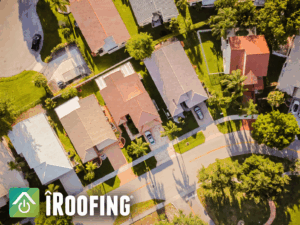
We’re sure you’ve been part of the following story. You arrive at a property ready to take roof measurents, but the satellite image is outdated, tree coverage blocks part of the roof, or a recent addition is missing.
How can you measure that roof without having to climb and start doing everything yourself? That is where drones can become useful for roof measurements.
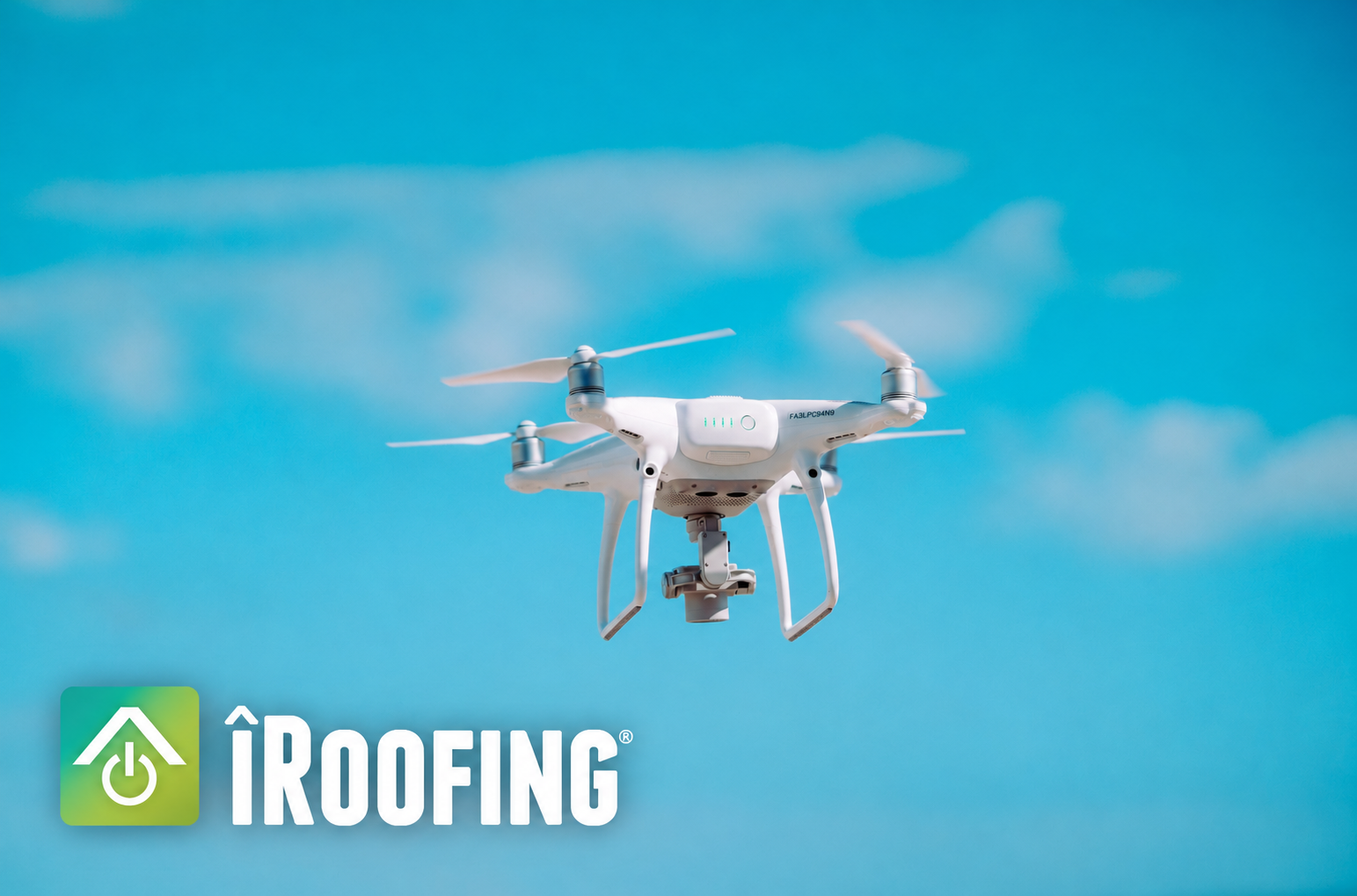
A drone gives contractors control over the images they capture while helping them document the roof from the ground. Combined with roof measurement software, those images can support measurements, inspections, reports, and estimates.
This guide explains how drone roof measurements work and how to turn drone imagery into useful project data.
Table of Contents
Why Use Drones for Roof Measurements?
Drones are especially useful when you need current imagery of a property.
Satellite and aerial images can be excellent for remote work, but they may be older, obstructed by trees, or lack the view needed to clearly identify a roof feature.
With a drone, you can capture the property while on site and choose the views you need. This can reduce the need to climb a difficult roof simply to collect dimensions while also providing photos for project documentation.
The value comes from combining clear imagery with software that turns those images into usable roof measurements.

Win More Jobs With
The Best Roofing Software.
Drone Roof Measurements vs Drone Roof Inspection
You might’ve found these two terms online, it is important to understand the difference between them.
A drone roof measurement and a drone roof inspection can use the same images, but they serve different purposes.
Drone Roof Measurements
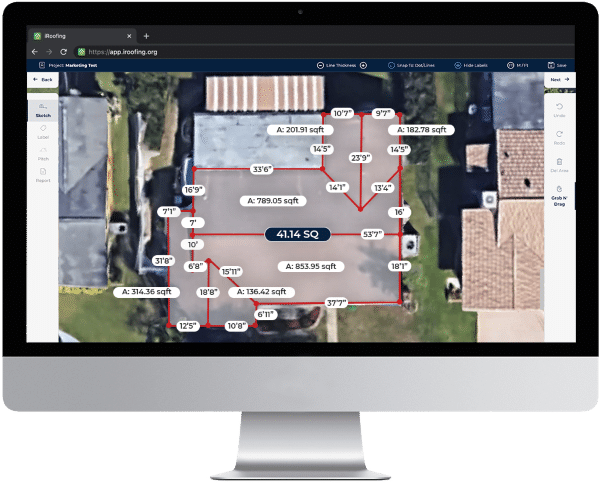
The objective is to calculate dimensions. Contractors may use imagery to identify roof planes and calculate areas, ridges, hips, valleys, eaves, rakes, pitch, and roofing squares. Those measurements can then support material calculations and estimating.
Drone Roof Inspection
A drone roof inspection focuses on visible roof conditions. Images can help document damaged materials, flashing, penetrations, storm damage, debris, or areas that may need closer investigation.
A drone improves visibility, but roofers may still need to verify layers, decking issues, or conditions that cannot be confirmed from imagery alone.
How to Measure a Roof With a Drone
Drone roof measurements require more than taking a photo. Image quality, scale, and pitch all affect the result.
1. Prepare the Property and Flight
Look for trees, power lines, nearby structures, people, and other obstacles. Check weather conditions and identify a roof dimension you can measure on site and later use to verify scale, such as a long eave.
2. Capture Clear Drone Imagery
Position the drone directly above the property when possible and keep the roof centered. A clear overhead view makes roof edges and individual planes easier to identify.
iRoofing recommends centering the drone over the house, keeping the image as square to the structure as possible, and avoiding edits that change image perspective before measurement.
3. Upload the Image to Roof Measurement Software
A good image is only the first part, the second is a good software to create a professional roof measurement report.
With iRoofing Roof Measurements, contractors can use drone imagery alongside satellite, HD aerial, and blueprint images. This gives you another option when the imagery normally available for a property does not provide the view you need.
4. Verify Scale and Roof Pitch
Use the known dimension recorded at the property to calibrate the image. For example, enter the length of a measured eave and use it as the reference for the remaining dimensions.
Then trace the roof planes and enter the correct pitch for each section. Do not assume every plane has the same slope.
5. Generate a Roof Measurement Report
Review the dimensions before generating a Roof Measurement Report. The report can organize roof areas and linear measurements for material calculations, estimates, and proposals.

How to Capture Better Drone Images for Roof Measurements
Keep the roof centered and capture an overhead view that clearly shows the perimeter and individual planes. Avoid flying so low that parts of the structure fall outside the image.
Record at least one known dimension while at the property so you can verify scale later. iRoofing also recommends uploading the original image instead of using external editing software to correct perspective or distortion.
If one image does not clearly show the structure, capture additional views instead of relying on an unclear image.
Drone vs. Satellite Roof Measurements
Satellite measurements are useful when you want to work remotely, qualify a project, or prepare before reaching the property. When the imagery clearly shows the roof, contractors can begin without an initial site visit.
Drone imagery is particularly useful when you are already on site and need a current view, when trees interfere with existing imagery, or when recent property changes are not visible.
A flexible workflow lets contractors choose satellite, aerial, drone, or blueprint imagery based on the project.
What Roofers Need to Know Before Flying a Drone
For U.S. contractors, drone flights performed for work or business generally fall under the FAA’s Part 107 rules. The FAA specifically identifies roof inspections as an example of non-recreational drone use.
Before flying, review pilot certification, registration, operating, and airspace requirements. Some controlled airspace requires authorization.
FAA Part 107 guidance for commercial drone operators is the best starting point for current federal requirements. Contractors should also check applicable state and local rules.
From Drone Roof Measurements to an Estimate
The measurement is only one part of the roofing workflow. Once it is complete, use the dimensions to calculate materials, waste, labor, and pricing.
With iRoofing, contractors can move from taking measurements into the Instant Roofing Estimator to turn project measurements into an estimate and proposal.
- Drone imagery
- Roof Measurements
- Roof Measurement Report
- Roofing Estimate
- Proposal
The drone is not the final product. It is another way to collect the project information needed to move the job forward efficiently.

Accurate Roof Measurements Reports
Delivered Fast. Priced Right.
Key Takeaways for Roofing Contractors
- Drones provide another source for current roof imagery and measurements.
- Drone roof measurements and inspections serve different purposes.
- Clear images and scale verification are essential.
- Drones are useful when other imagery is outdated or obstructed.
- Roof measurement software can connect drone imagery with reports and estimates.
- U.S. commercial drone operations must follow applicable FAA requirements.
Drone Roof Measurements FAQ
Can You Use a Drone for Roof Measurements?
Yes. Contractors can capture overhead imagery and use compatible software to establish scale, trace roof planes, calculate dimensions, and create a measurement report.
How Do You Measure a Roof With a Drone?
Capture a clear overhead image, record a known dimension, upload the image to roof measurement software, verify scale, enter pitch, trace the roof, and review the completed measurements.
Are Drone Roof Measurements Accurate?
Accuracy depends on image quality, scale calibration, pitch information, and how carefully the roof is traced. Verify the completed measurement before ordering materials or finalizing an estimate.
What Is the Difference Between a Drone Roof Measurement and a Drone Roof Inspection?
A measurement focuses on dimensions such as area, edges, and pitch. An inspection focuses on visible conditions, damage, materials, flashing, and other roof features.
Do Roofers Need an FAA Drone License to Measure Roofs?
In the United States, drone work performed for business generally falls under Part 107. Roofers should review current FAA requirements for certification, registration, operations, and airspace authorization before flying.